


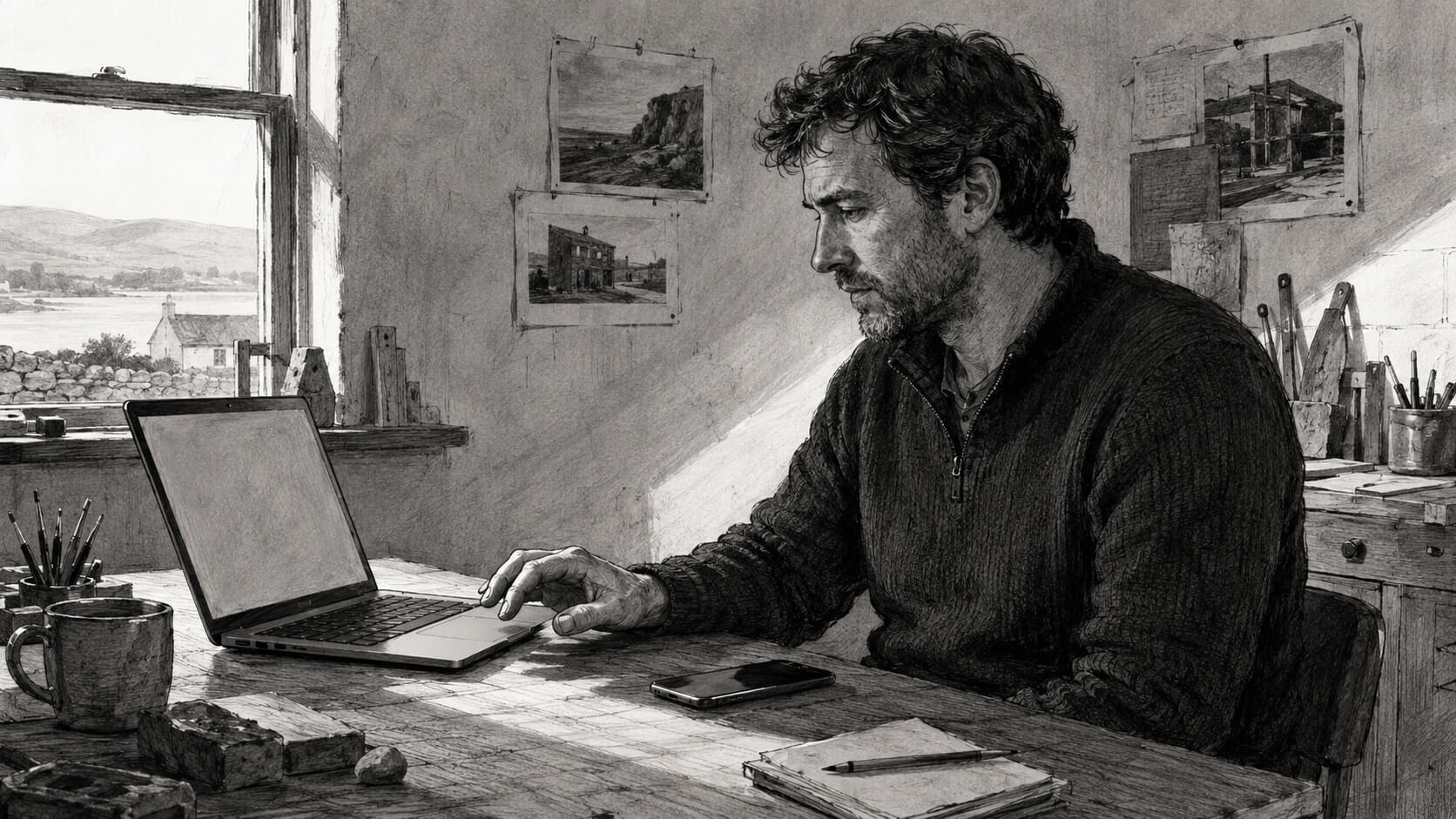
The call had gone well. The customer understood the service, the price sounded reasonable and the conversation was easy.
Then came a simple request: “Could you send me your website?” He said he would.
Before copying the link, he opened the site himself. Nothing was broken. That almost made it worse.
The logo belonged to the early days of the business. The photographs showed work he no longer considered his best. One service was missing, while another, which the company hardly offered any more, still occupied half the homepage.
He began typing a message beneath the link: “The website is a little out of date.” He deleted it. “We are currently changing a few things.” He deleted that too.
In the end, he sent only the link. There was no reply that afternoon.
He told himself the customer was busy. Perhaps the price was too high. Perhaps they had already chosen someone else. All reasonable explanations.
A few days later, another customer asked for the website. This time, the explanation came out before the link had even been sent.
“Some of the photographs are old. We offer more services now. The site does not really show everything we do.”
The customer had not criticised anything. They had not even opened the website yet. Still, he was already defending it.
The business had moved forward quietly, one job at a time. Its website had remained where it was, like an old photograph kept in a wallet long after the person in it had changed.
He looked at the link on his screen. It was meant to introduce the business when he was not there. Instead, he had to arrive first and apologise for it.
That was when he noticed the pause. It had become part of every introduction.